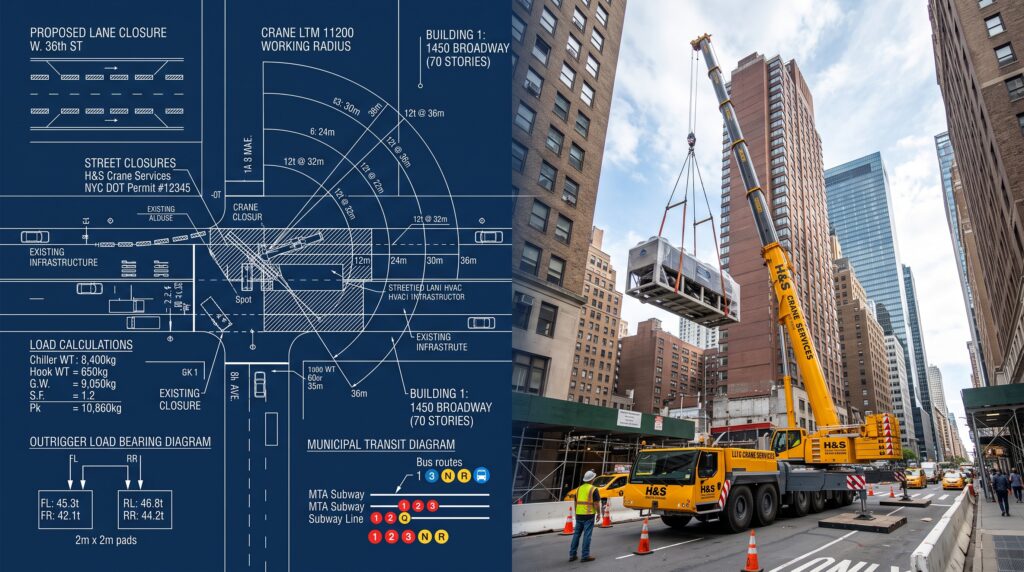
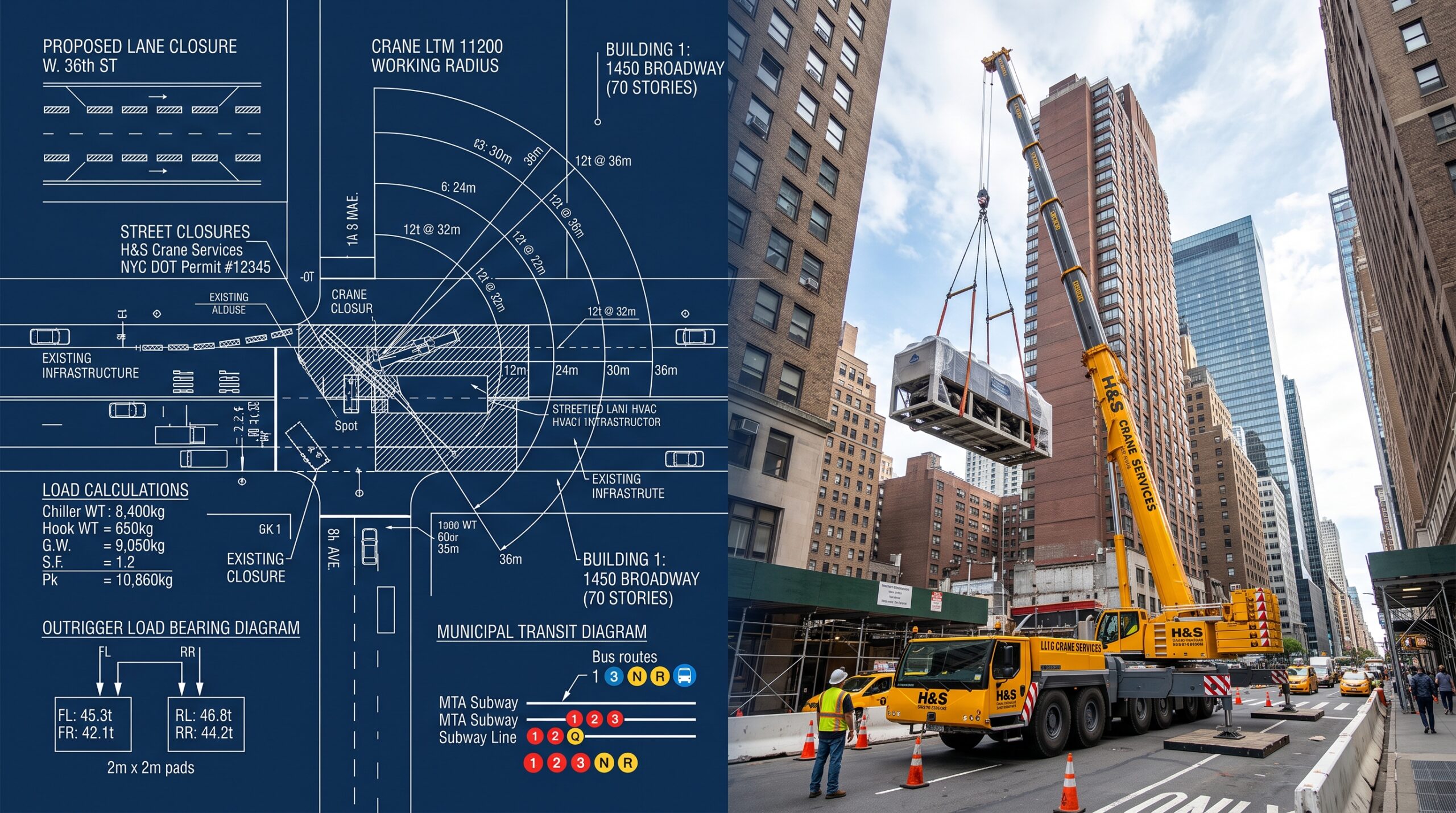
Lifting a 15-ton chiller onto a Midtown rooftop or maneuvering heavy switchgear into a Lower Manhattan basement is only half the battle. Long before a truck-mounted crane outrigger touches NYC asphalt, an intricate process of engineering, city planning, and bureaucratic coordination must take place.
For project managers, facilities teams, and mechanical contractors, navigating this front-end logistics phase can mean the difference between keeping a critical timeline or facing costly stop-work orders. Here is a breakdown of what actually happens behind the scenes to take a project from concept to an approved, fully managed street closure.
1. Initial Site Evaluation and Engineered Lift Plans
Every major pick starts with a comprehensive site assessment. Setting up a heavy-duty hydraulic truck-mounted crane on crowded municipal streets requires far more than measuring curb space.
Our team analyzes:
- Underground Infrastructure: Vaults, subway tunnels, gas mains, and sewer lines dictate where crane outriggers can safely land.
- Overhead Clearances: Low-hanging power lines, trees, traffic signals, and adjacent building parapets.
- Swing Radius and Setback: Determining the precise tonnage and boom length needed based on pick weight, distance, and staging room.
From there, our licensed Professional Engineers (PE) draft detailed rigging diagrams and lift plans. These plans establish crane configuration, pick radiuses, outrigger pad loadings, and rigging equipment specifications. When lifts happen above or near transit lines, approvals and coordination with the MTA are integrated into the engineering phase.
2. Navigating NYC Agencies, DOT Permits, and Expediting
Securing a legal street closure in New York City is an art of municipal coordination. Because every borough, neighborhood, and block presents unique zoning rules, having dedicated expediter services is essential.
Securing approval involves interacting with multiple public agencies:
- NYC Department of Transportation (DOT): Review and issuance of full or partial street closure permits, lane closures, and sidewalk occupancy permits.
- Department of Buildings (DOB): Review of crane permits, CD-series filings, and Master Rigger approvals.
- MTA & Transit Authority: Required when working near active bus routes, subway grates, or underground tunnels. Bus routes must often be detoured in advance.
- Local Precincts and Fire Departments (FDNY): Ensuring clear paths for emergency response vehicles remain intact at all times during the operation.
Lead times are critical. A simple lane closure might take a couple of weeks, while a full commercial street closure involving bus detours requires months of advanced planning and notice.
3. The Logistics and Safety Plan on Pick Day
Permits are in hand and the engineered plans are stamped; now the operation shifts to physical ground execution. Rigging is defined by specialized mechanical equipment and strict adherence to documentation, scopes of work, and labor safety protocols.
On the day of the lift, safe street management relies on:
- Certified Flaggers and Flagmen: Ensuring traffic safely reroutes around work zones without causing bottlenecks.
- Pedestrian Managers: NYC foot traffic never stops. Dedicated pedestrian managers secure the perimeter, close sidewalks where overhead work occurs, and guide pedestrians safely past staging zones.
- Precision Equipment Mobilization: Our fleet of truck-mounted cranes (ranging from 5 to 600 tons) mobilizes with the exact rigging gear, spreader beams, and support trucks needed to establish the pick zone immediately upon street shutdown.
Plan Early to Keep Your Job on Schedule
A successful crane pick in New York City is 90% preparation and 10% execution. Partnering with a comprehensive crane and rigging provider means you do not have to manage engineering, municipal filings, and physical labor in silos.
From the first site survey to the final teardown, United Rigging handles the heavy lifting, both on the street and in the permit office.
Planning an upcoming equipment swap or rooftop install? Connect with our team at unitedriggingny.com to start your site evaluation, permit acquisition, and lift engineering early.